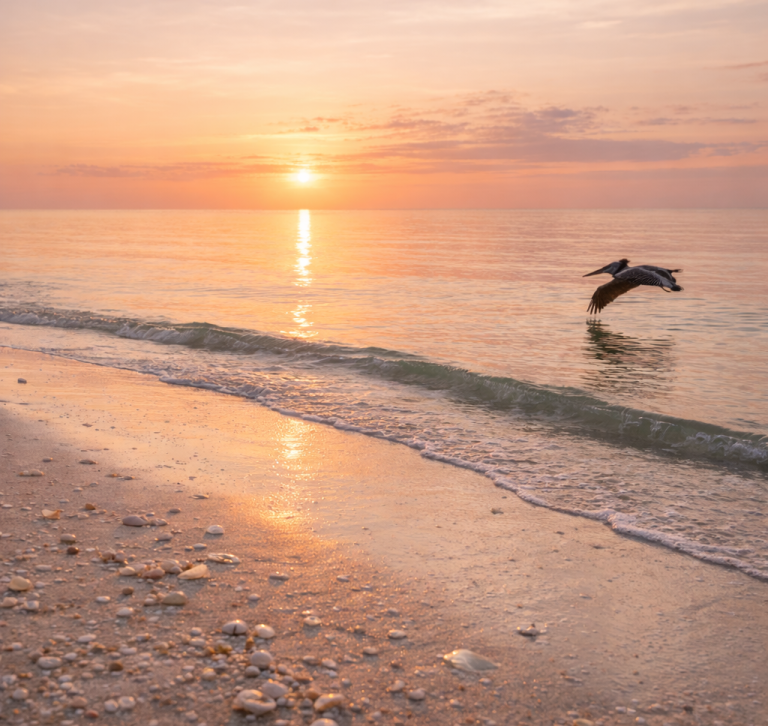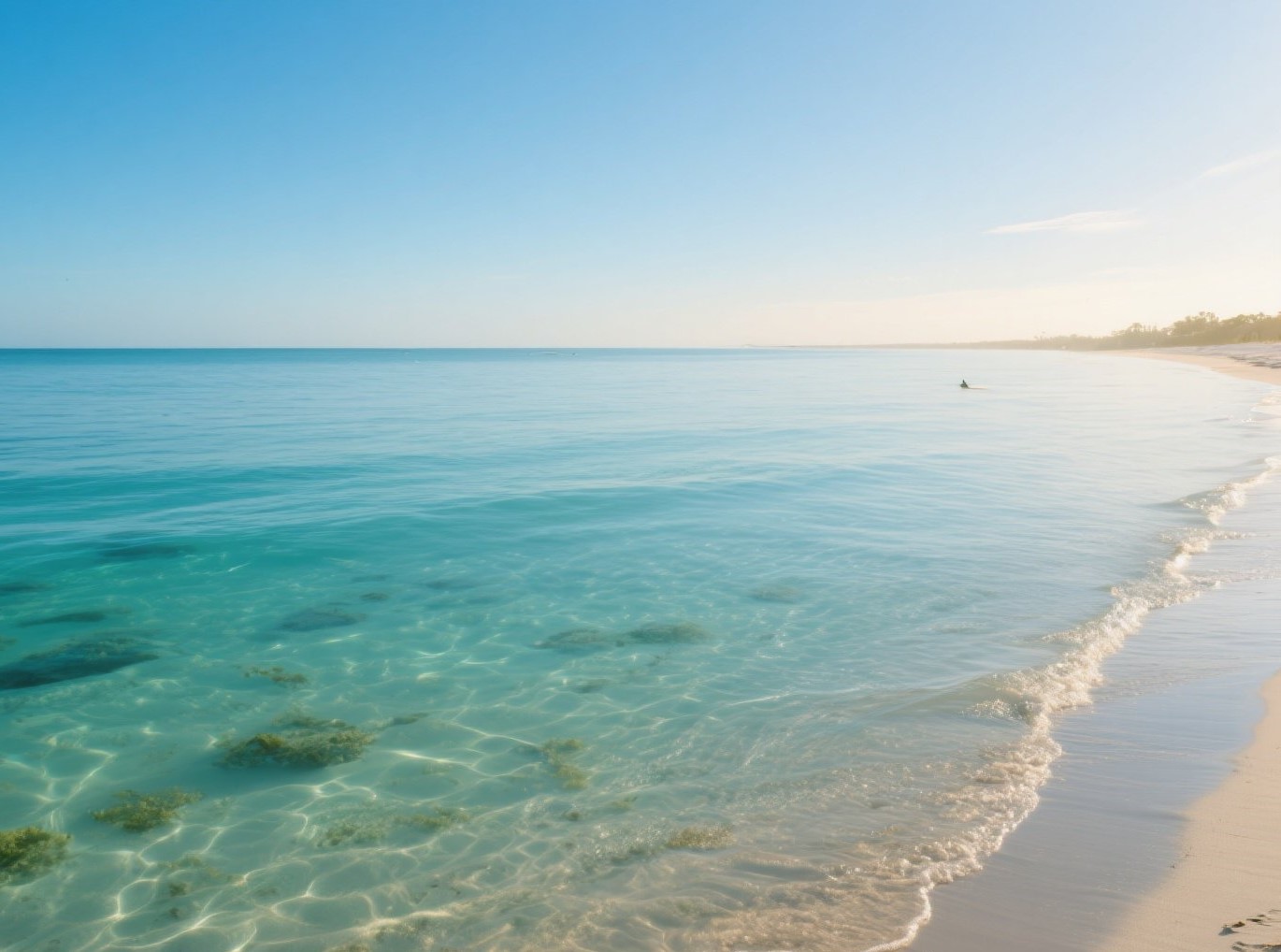

When the water calms, Sanibel reveals a hidden world just below the surface, where marine animals move freely, quietly, and without display, inviting patient observers to witness life as it naturally unfolds.
Sanibel’s calm waters hide more life than they show at first glance.
When the sea grows quiet, the surface becomes a doorway. Beneath it, marine animals move slowly, following rhythms shaped by light, temperature, and time. This is not a spectacle, it is everyday life, revealed only to those willing to watch closely and wait.
When the Water Reveals Its Residents
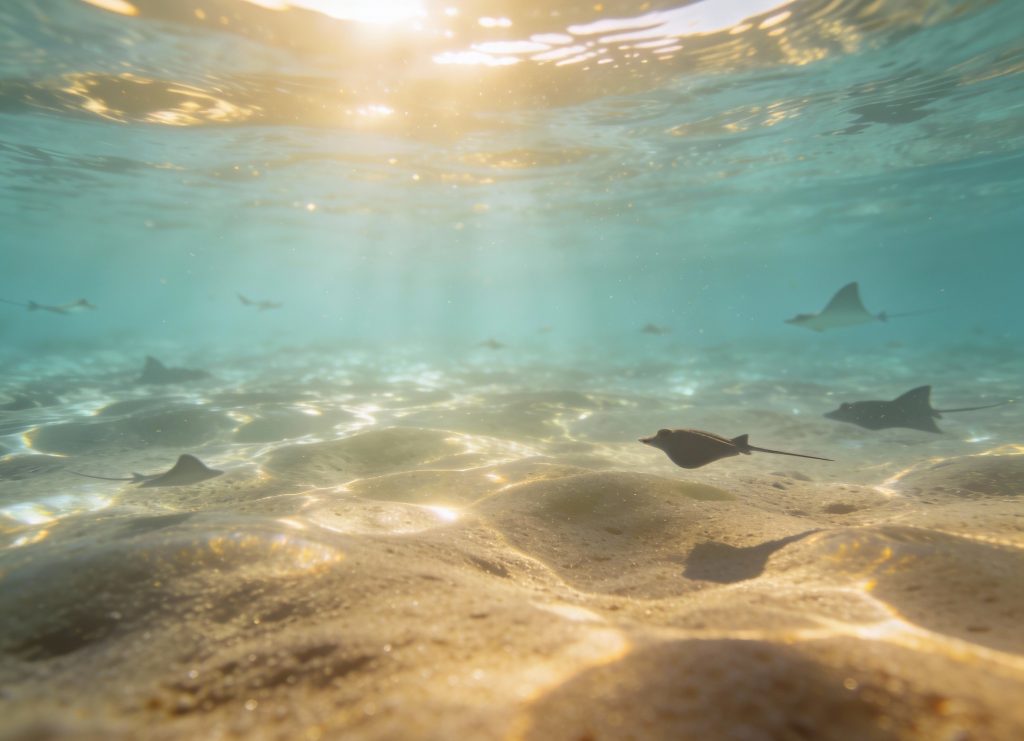
Calm water does more than soften the shore. It opens a clear window beneath the surface. In Sanibel, moments of low activity and gentle seas allow the underwater world to come forward, visible even from the beach.
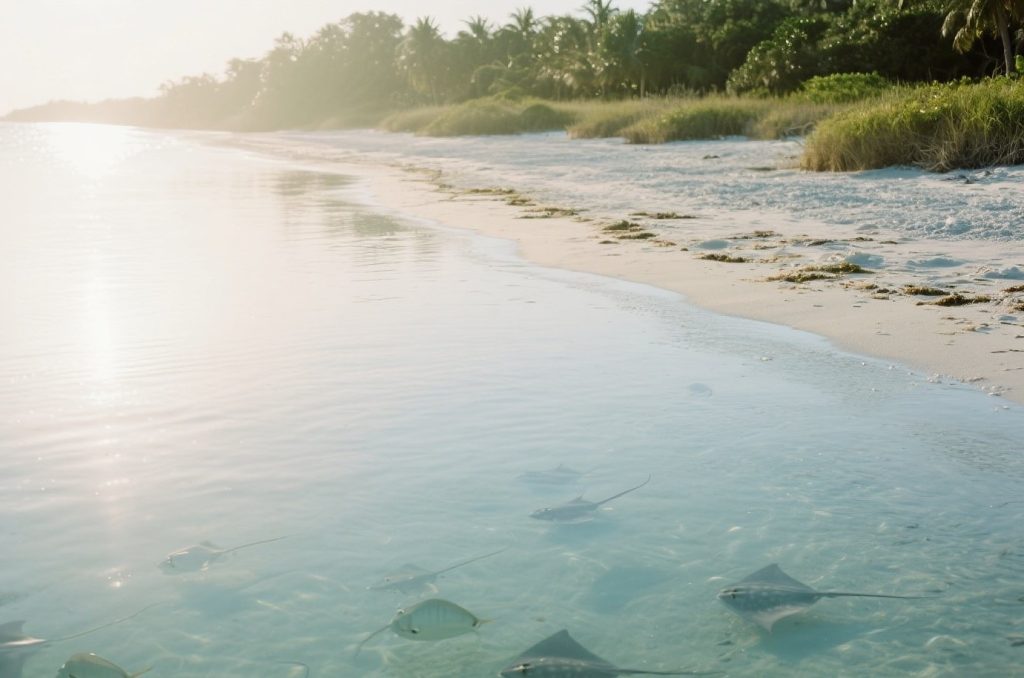
Beneath the surface, movement is slow and deliberate. Shadows drift across pale sand, pause, then fade. Small fish hover close to shallow sandbars, using them as shelter. Rays pass silently, their wide bodies gliding like dark kites over light ground. Nothing feels staged. Nothing asks to be noticed.
These animals are not reacting. They are simply continuing their day.
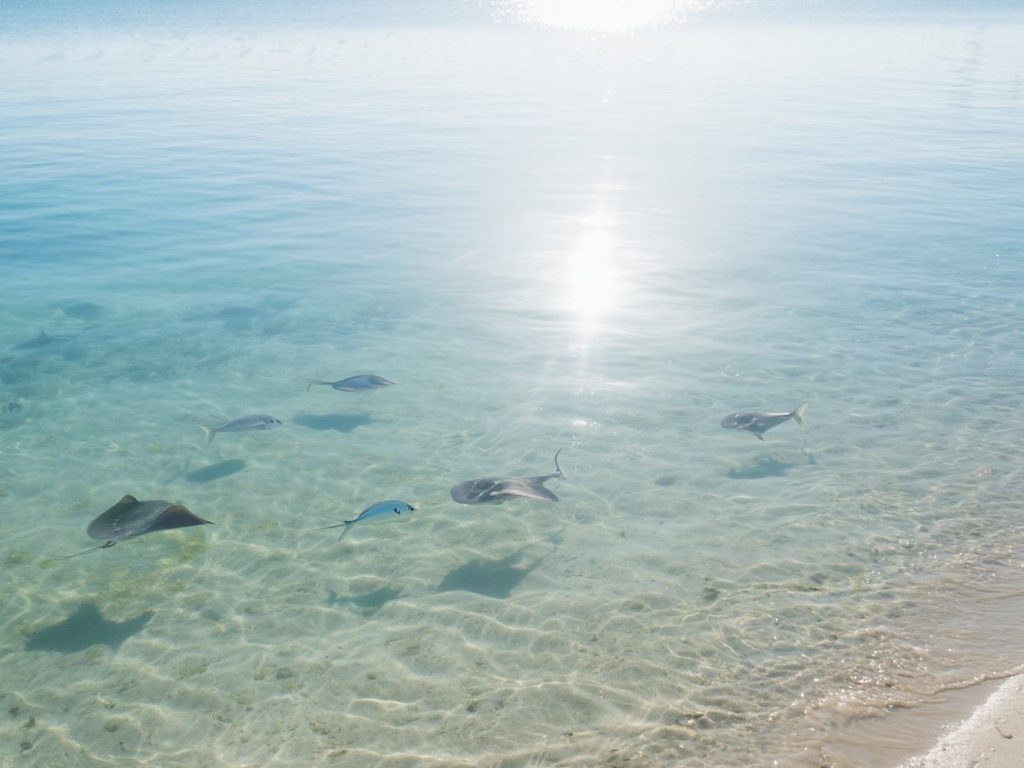
What makes this moment possible is clarity. Clear water allows sunlight to reach the seabed, revealing shapes, colors, and motion that often remain hidden. With fewer disturbances, marine life moves closer to shore, unhurried and unafraid.
What becomes visible during calm conditions:
- Small coastal fish resting near sandbars
- Rays traveling along shallow seabeds
- Natural swimming patterns without sudden turns
- Subtle contrasts between light sand and dark movement
This is when the sea feels alive in a different way—not loud, not crowded, just aware.
Gentle Encounters in Shallow Waters
Shallow water is where encounters happen naturally. In Sanibel, calmer seas allow marine animals to move closer to shore without urgency. The water holds warmth, clarity, and safety, creating a space where daily routines unfold quietly.
Dolphins surface with little splash, often just once, before slipping back under. Their movements follow schools of fish that drift along the coast. Manatees appear more slowly. They glide through warmer shallows, rising for air with steady patience. These moments feel rare, yet they are part of a regular rhythm shaped by tides and temperature.
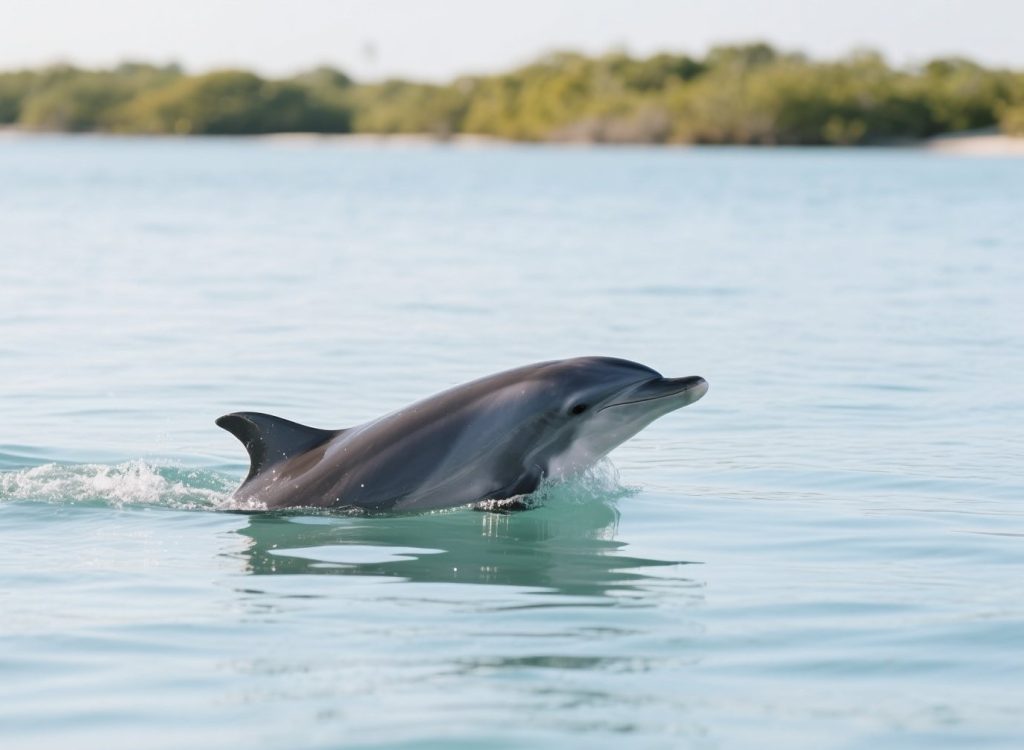
What seems like coincidence is often timing. When waves are low, sound travels differently underwater. Animals waste less energy, move more efficiently, and stay longer in feeding areas. Shallow zones become shared spaces where marine life passes through without disturbance.
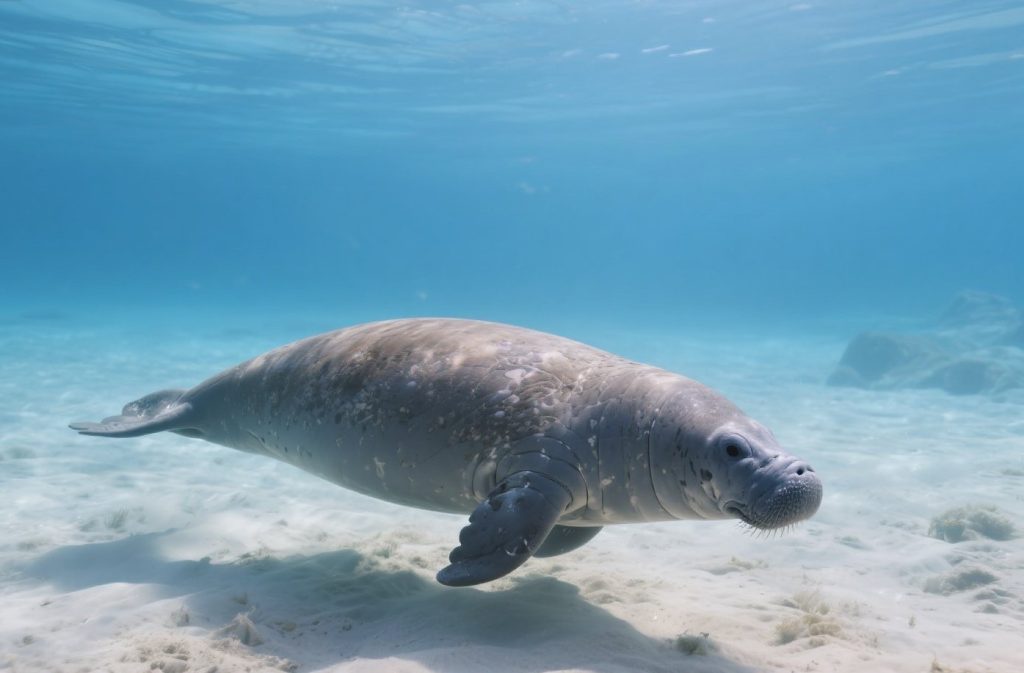
The table below shows how calm conditions influence animal behavior near the coast:
| Marine Animal | Behavior in Calm Shallows | Natural Reason |
|---|---|---|
| Dolphins | Surface gently and travel closer to shore | Easier hunting and reduced wave resistance |
| Manatees | Linger in warm shallow areas | Stable temperature and available seagrass |
| Coastal fish | Maintain steady swimming patterns | Clear visibility and low stress |
| Rays | Glide along sandy bottoms | Smooth seabed and predictable currents |
In these conditions, the sea does not feel empty. It feels inhabited. Calm water does not remove life from view—it brings it closer, allowing quiet encounters that feel unplanned yet perfectly placed.
Stillness as Shelter

Stillness in the sea is not absence. It is protection.
When the water remains calm, marine animals conserve energy. Movements become smooth instead of sharp. Feeding happens without haste. In Sanibel, these quiet periods create natural shelter, not made of walls, but of balance.
Fish move in steady lines, adjusting gently to the current rather than fighting it. Rays remain close to the seabed, their bodies shaped to glide instead of push. Manatees rest longer in warm shallows, surfacing slowly, trusting the water around them. Calm seas allow these animals to exist without constant reaction.
Sound travels differently in still water. Noise fades. Vibrations lessen. For marine life, this quiet reduces stress and improves orientation. What feels calm at the surface becomes safety below.
Sanibel’s coastal environment depends on these moments of stillness. They give marine life room to follow natural rhythms without interruption. The sea does not need to be empty to feel calm. It needs space. And in that space, life continues quiet, steady, and whole.
Conclusion: Where Quiet Life Continues
Life beneath the surface does not wait to be discovered. It moves on its own time.
In Sanibel, calm water reveals more than reflections. It reveals presence. Marine animals appear not because they are rare, but because the sea allows them to be seen. When waves soften and noise fades, the shoreline becomes a place of passing lives rather than empty space.
To experience this, arrive when the beach is still. Watch the water before stepping in. Let your eyes adjust. Stay patient. The sea will show what it is ready to share.
If you want to truly see Sanibel, slow down and come closer not to disturb, but to witness. Some journeys are not measured by distance, but by how quietly you learn to observe.
This is your invitation. Come when the water is calm. Look beneath the surface. And let the quiet lead you.

I’m Ayla Wolesky, and I’ve spent years exploring every corner of Sanibel Island. From its pristine beaches to the hidden gems only locals know about, I’m passionate about sharing everything this beautiful island has to offer. Whether it’s the best spots for shelling, the wildlife that makes Sanibel so special, or where to enjoy a perfect sunset, I’ve got you covered. My goal is to provide insider tips and up-to-date information that will help you experience Sanibel Island like never before.