
Ospreys rebuild. Dolphins glide. One fact surprises most visitors…
March on Sanibel feels like a living postcard of pink skies, wheeling birds, and water smooth as glass. “March is peak nest-building for ospreys, and calm Gulf mornings boost dolphin sightings,” says Audubon. Source: Sanibel-Captiva Audubon Society. I’ve watched a 300-pound nest sway like a hammock. It looks fragile, yet it lasts for years. “Gopher tortoise burrows can shelter 350 species,” notes FWC. Source: Florida Fish and Wildlife Conservation Commission. If you love quiet beaches and real wildlife, keep reading one small habit most visitors miss that changes everything…
🦅 Ospreys — The Sky Engineers of Sanibel
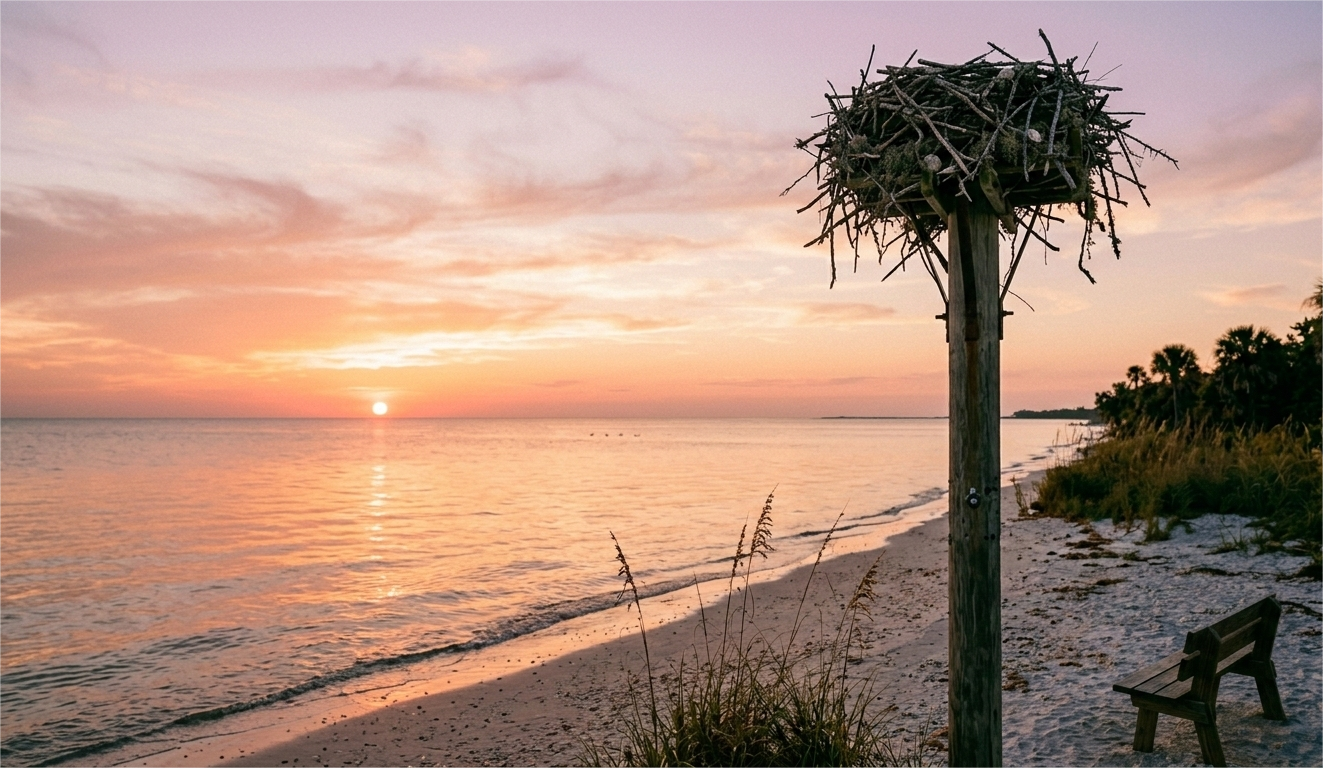
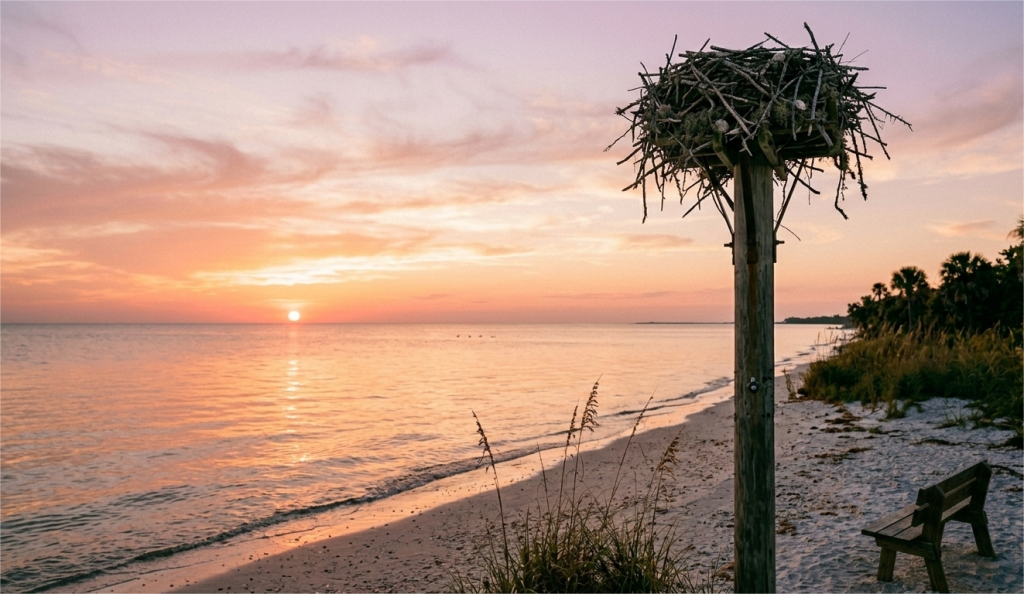
Did you know an osprey nest can weigh up to 300 pounds?
That’s heavier than a grand piano bench. And it sits high above the island, balanced like a crown.
📌 Why March Matters
| Fact | What It Means |
| Nest-building peaks in late winter to early spring | March is prime viewing season |
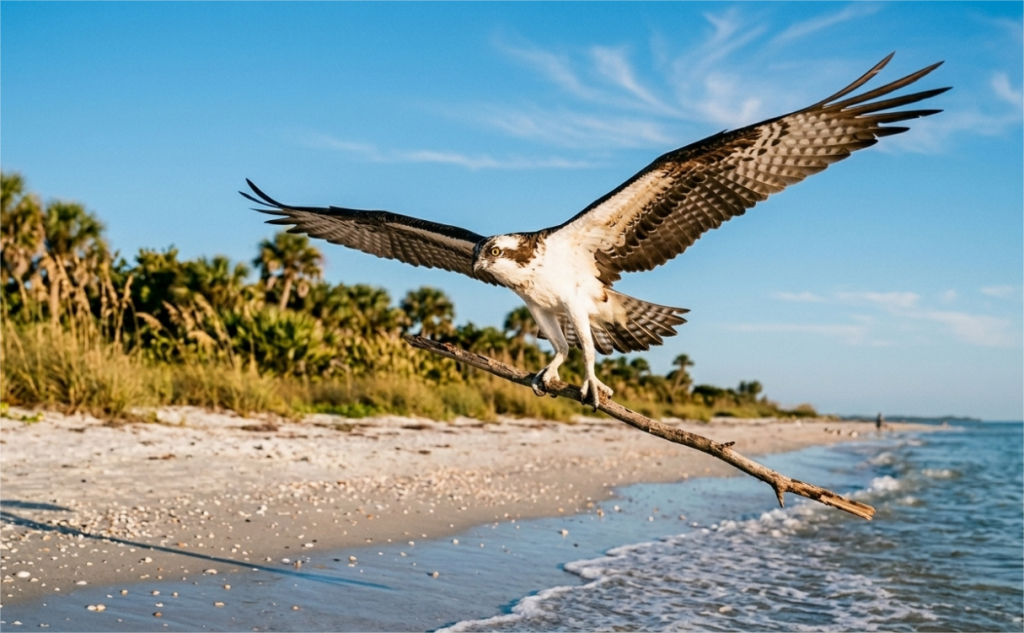
| Wingspan: 4.5–6 feet | Easier to spot in open sky |
| Diet: 99% fish | Always seen near water |
| Return to same nest yearly | Generational “sky homes” |
An osprey doesn’t just build.
It renovates.
Sticks. Seaweed. Even stray rope.
If one flies overhead carrying twigs, that’s home improvement in progress.
👀 What to Look For (Easy Spotting Guide)
- Large messy stick nests on:
- Utility poles
- Dead pine trees
- Channel markers
- Sharp, high-pitched whistles
- A sudden hover… then a straight-down dive
The dive is stunning.
Like an arrow dropped from the sky.
🏗️ Nest Engineering Secrets
| Nest Detail | Why It’s Impressive |
| Up to 6 feet wide | Built to last decades |
| Can weigh 300 lbs | Strong enough for storms |
| Added to every year | Gets bigger over time |
A nest may look messy.
It isn’t.
Each stick locks like puzzle pieces. Wind-resistant. Storm-tested.
❤️ A Rare Fact Few Visitors Notice
Ospreys often mate for life.
If both survive migration, they return to the same nest.
That tall structure seen from the road?
It might be 10, even 15 years old.
Strange, isn’t it?
A bird that travels thousands of miles… yet comes home to the same address.
Quick Viewing Tips for March
- Best time: Early morning (7–9 AM)
- Calm weather = better fishing visibility
- Bring binoculars (8×42 works great)
- Scan near the Sanibel Causeway and quiet canals
March skies feel busy.
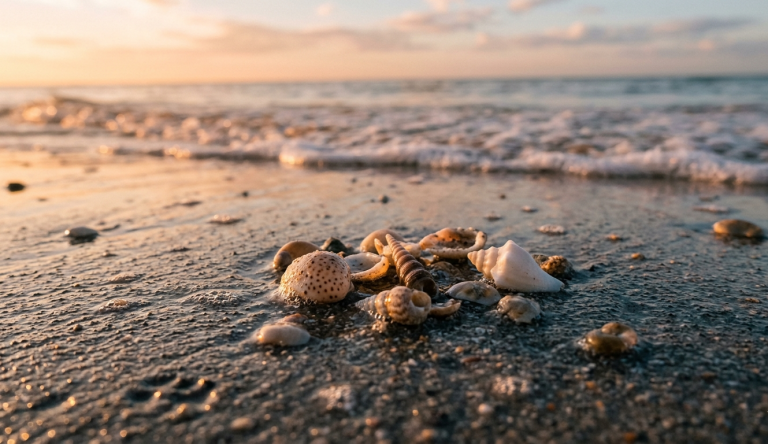
But most people look down at shells.
Look up instead.
One surprising detail about these sky engineers changes how that sunset feels — and it’s coming next.
🐬 Dolphin Hour — The Calm Water Secret
When the Gulf turns to glass, something magical happens.
A ripple. A silver arc. Then silence again.
March mornings feel slower. The sea rests before summer storms wake it up.
⏰ Best Time to Spot Dolphins
| Time of Day | Why It Works | What You’ll Notice |
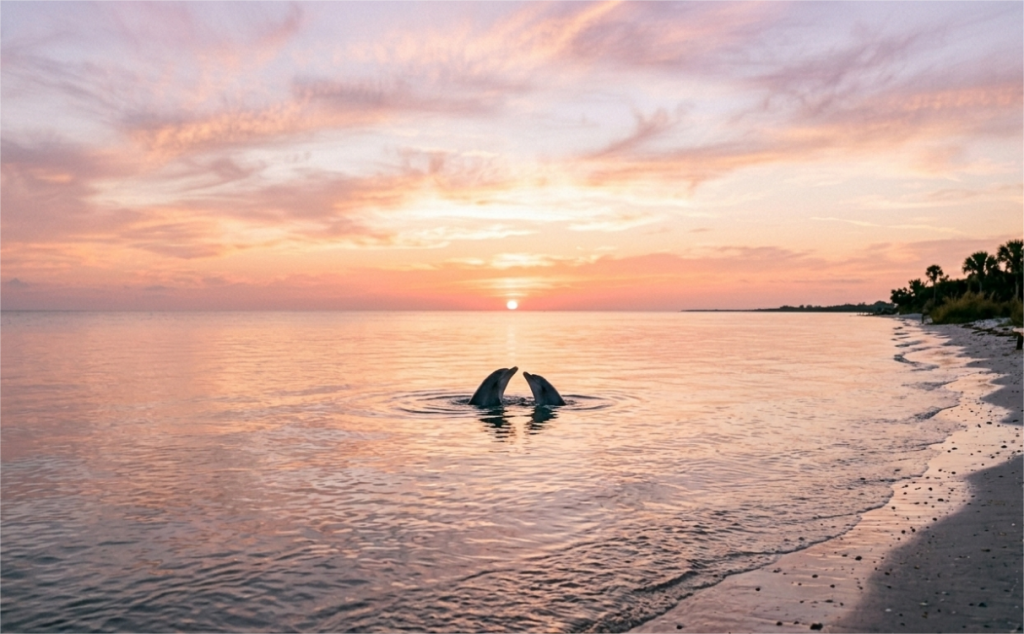
| 7–9 AM | Calm winds, low boat traffic | Smooth surface, easy dorsal fin sightings |
| Sunset hour | Fish move closer to shore | Gentle rolling splashes |
Morning water looks like a mirror.
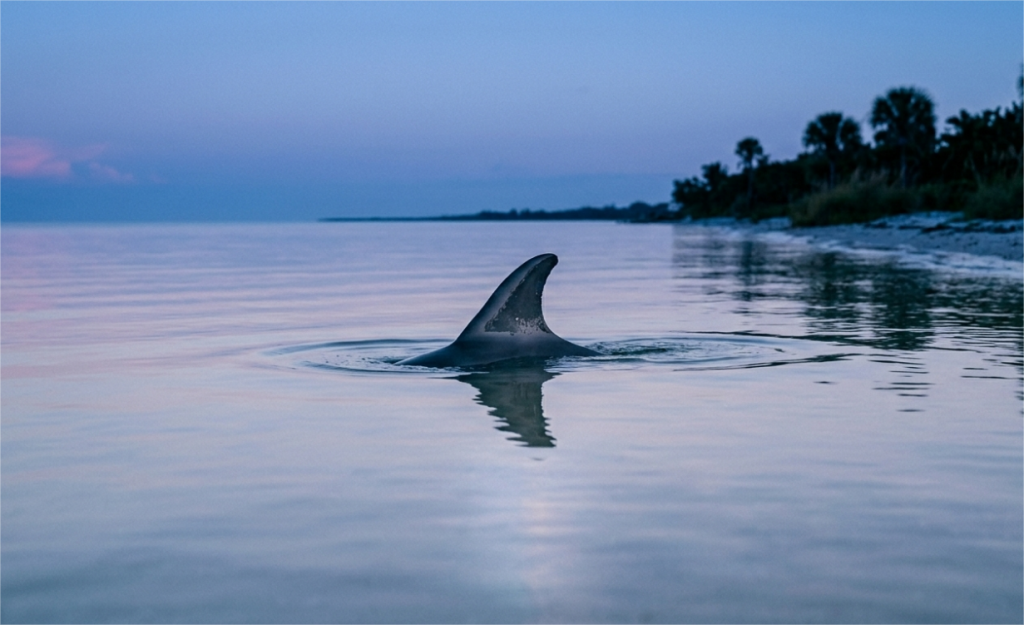
That’s when dorsal fins slice through it like quiet knives.
👀 What to Watch For (Local Trick)
- Birds hovering in one spot
- Sudden splashes near baitfish
- A slow, curved fin — not sharp like a shark
- Two or three surfacing together
If birds circle tightly, fish are below.
And dolphins are never far behind.
🧠 Wildlife Trivia That Surprises Most Visitors
| Fact | Why It Matters |
| Dolphins sleep with half their brain awake | They must surface to breathe |
| Blowhole on top of head | Conscious breathing only |
| Travel in pods | Social and protective behavior |
| Can reach 20 mph | Fast hunters in short bursts |
Half asleep. Half awake.
Always aware.
It sounds impossible. Yet it’s true.
🌊 Why March Is Different
- Fewer afternoon thunderstorms
- Lighter boat traffic than peak summer
- Clearer water visibility
- Cooler air, less haze
Calm water equals better sight lines.
Less chop means less guessing.
Sometimes dolphins surface just yards from shore near the Sanibel Causeway. The first time that happens, it feels unreal. Like the ocean blinked.
Quick Dolphin Hour Checklist
- Bring small binoculars
- Stand still for 5–10 minutes
- Scan slowly, left to right
- Listen for a soft “whoosh” exhale
Patience beats movement.
Stillness wins.
And one small shoreline clue most visitors ignore can double sightings during March calm days that secret comes next.
🐢 The Gentle Giants & Slow Walkers
March is the crossover month.
Winter visitors linger. Spring travelers stir.
And in the water and on the sand, two quiet stars move at their own pace.
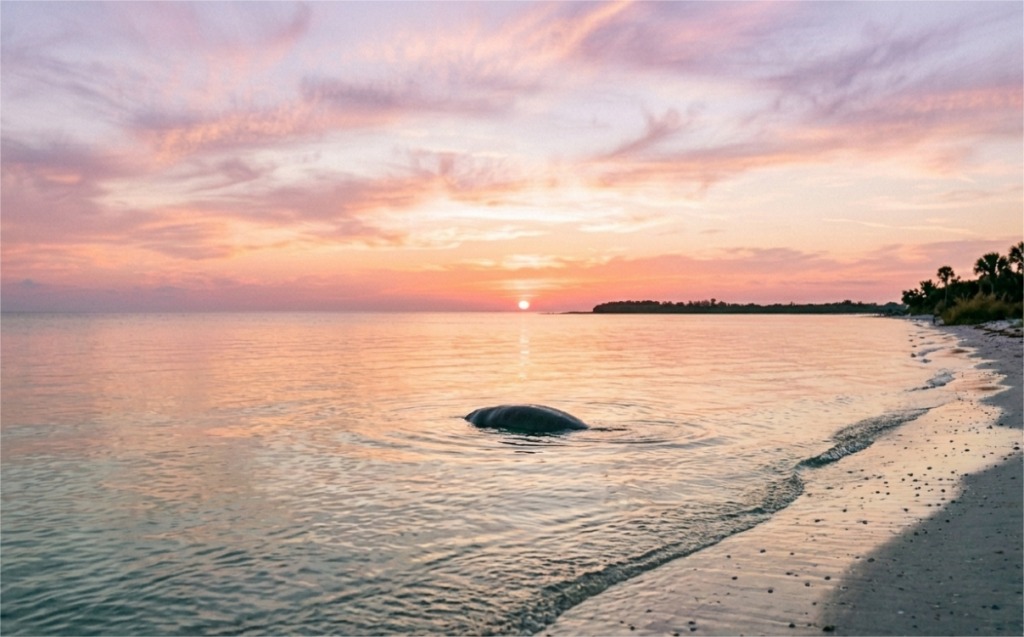
🌊 Manatees — The Floating Giants
| Fact | Why It’s Special |
| Weight: 800–1,200 lbs | True gentle giants |
| Diet: Seagrass & plants | Completely herbivores |
| Speed: 3–5 mph cruising | Slow, energy-saving swimmers |
| Must surface to breathe | Seen rolling softly at top |
March water is still warm in canals and back bays.
Manatees linger before heading north.
A slow swirl.
A round back rising like a gray island.
Then a soft breath — pffft.
It’s easy to miss.
It’s impossible to forget.
👀 Where to Look (Calm Days Only)
- Quiet canals
- Marina edges
- Warm, shallow channels
- Early morning sunlight
Cloudy days make them harder to see.
Bright mornings reveal shadows beneath the surface.
🐢 Gopher Tortoises — The Land Architects
They move like time itself.
Slow. Steady. Certain.
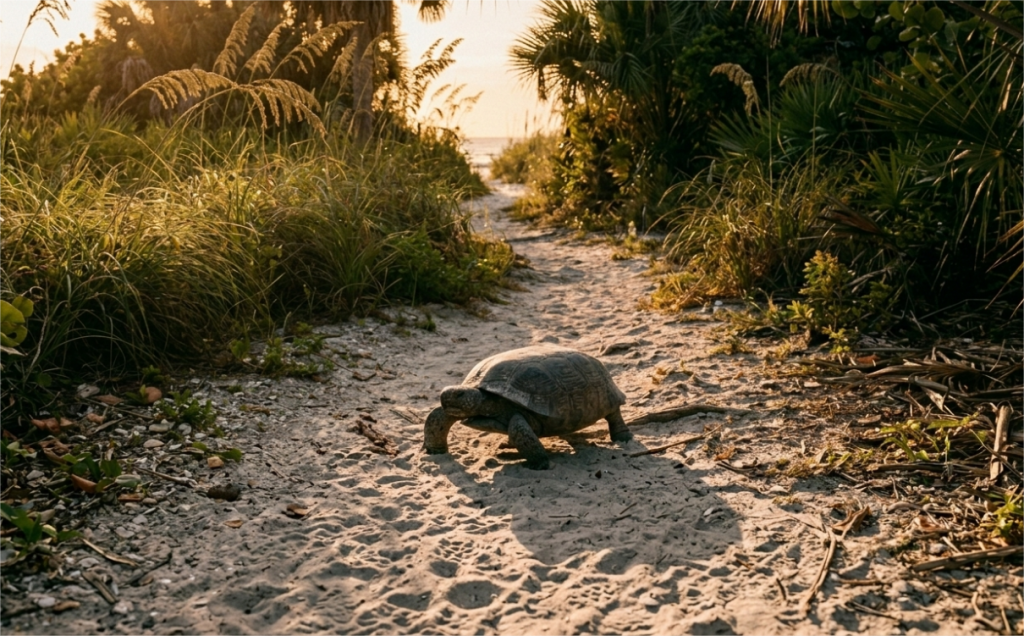
🏗️ The Burrow That Protects Hundreds
| Burrow Detail | Why It Matters |
| Up to 40 feet long | Deep temperature control |
| 6–10 feet deep | Storm protection |
| 350+ species use it | Called a keystone species |
A single burrow can shelter:
- Burrowing owls
- Small snakes
- Frogs
- Rabbits
- Insects
That sandy hole is not empty.
It’s an apartment building underground.
Strange, isn’t it?
The slowest walker builds one of the busiest homes.
🚗 Roadside Reminder
- Stop and wait
- Never touch or move a tortoise
- Keep pets at a distance
- Stay at least 50 feet from manatees
Patience protects wildlife.
Why March Feels Different
- Fewer summer boats
- Clearer water visibility
- Mild temperatures
- Active wildlife before peak heat
Slow creatures teach something simple.
Speed isn’t everything.
One tiny behavior most visitors overlook helps spot both species more often — and it has nothing to do with binoculars.
🌿🐬🦅 Can You Guess Who Does This?
Three island neighbors.
Three surprising talents.
Only one March shoreline.
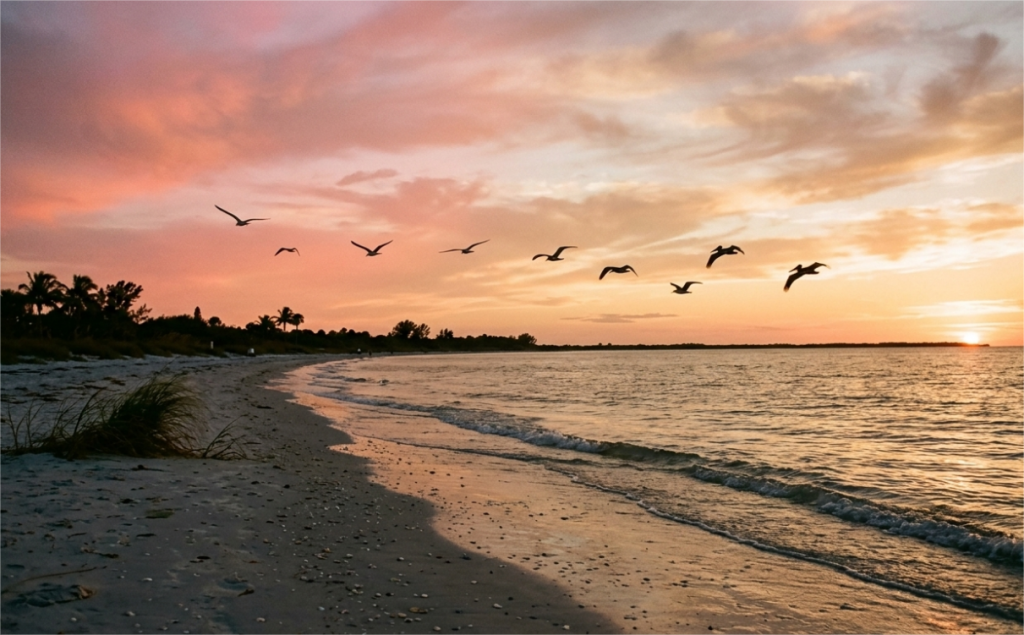
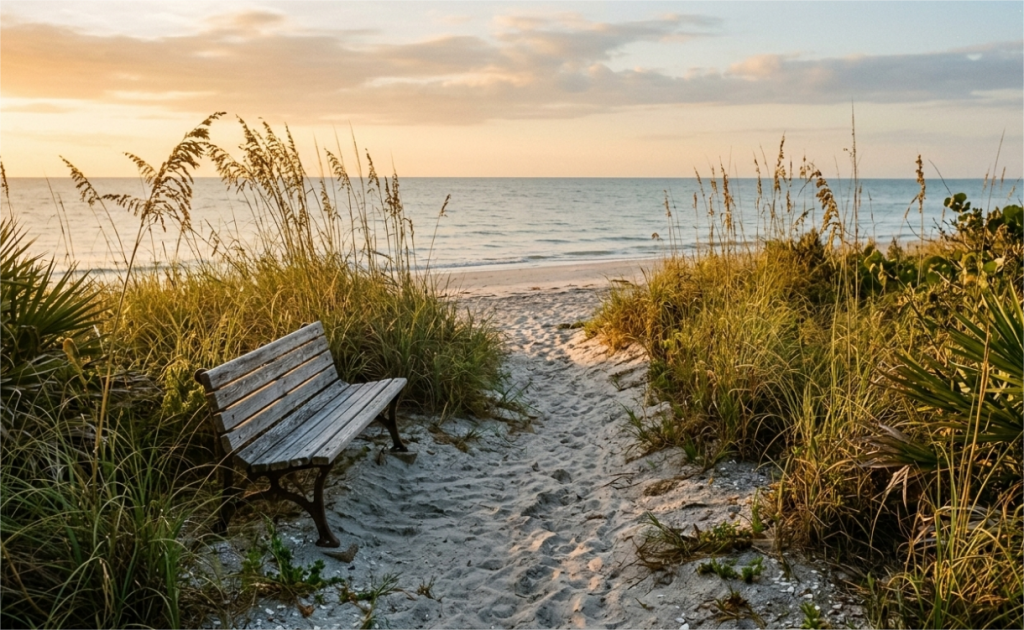
Take a slow breath. Picture calm water. Pink sky. A sandy path.
Now — guess.
❓ Question 1
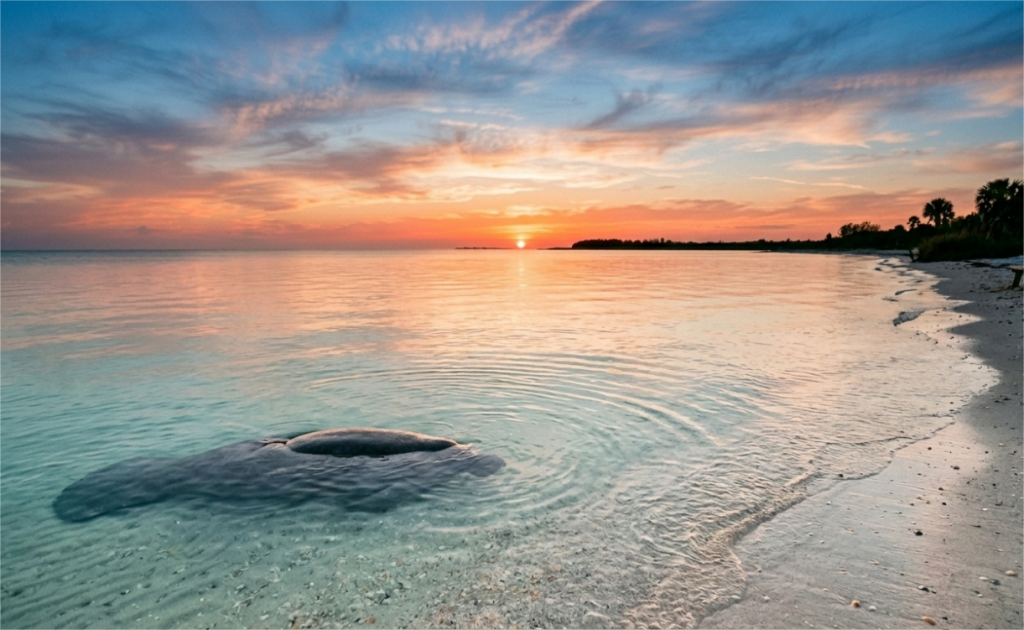
Which animal can weigh 1,000 pounds but eats only plants?
Clues
- Eats seagrass and aquatic plants
- Must surface to breathe
- Moves 3–5 mph cruising speed
- Can live 50–60 years
| Trait | Detail |
| Diet | Herbivore (strictly plants) |
| Weight | 800–1,200 lbs |
| Nickname | Sea cow |
| Protection Status | Federally protected marine mammal |
Big body. Gentle soul.
Looks like a floating gray cloud under the water.
❓ Question 2
Which bird dives feet-first into the water to catch fish?
Clues
- Wingspan up to 6 feet
- Diet is 99% fish
- Nests weigh up to 300 pounds
- Talons have reversible outer toe for gripping fish
| Behavior | Why It’s Unique |
| Feet-first dive | Built for fishing precision |
| Barbed foot pads | Grip slippery prey |
| Nests on poles | High visibility |
That hover before the drop?
Pure focus. Like a kite frozen in the sky.
❓ Question 3
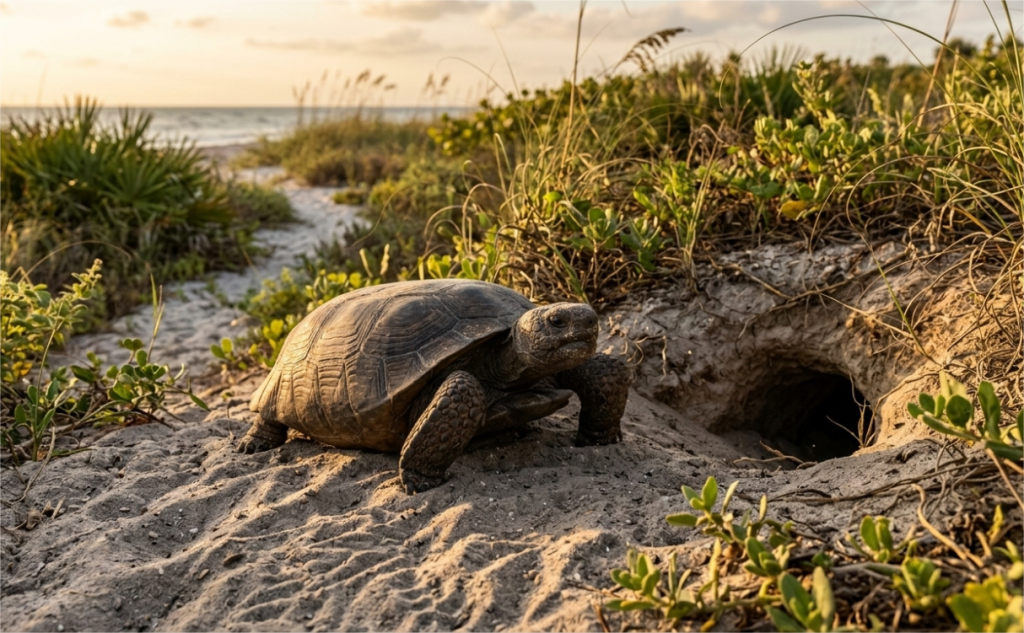
Which island resident builds burrows that protect hundreds of other species?
Clues
- Burrows can reach 40 feet long
- Called a keystone species
- Moves slowly, lives up to 60 years
- Shares burrow space with 350+ species
| Burrow Feature | Purpose |
| Deep tunnel | Temperature control |
| Sandy soil | Easy digging |
| Wide entrance | Multiple animals access |
Slow walker. Master builder.
An underground architect with no rush at all.
✍️ Final Guess
Write answers down before scrolling.
No peeking.
Ready?
✅ Answers
- Manatee
- Osprey
- Gopher tortoise
If all three were easy, island eyes are sharp.
If one was tricky, March still has more secrets waiting in plain sight.
🌅 Why March Feels So Special on Sanibel
March sits between seasons.
Not peak crowds.
Not summer heat.
Just movement. Quiet movement.
🌿 What Makes March Different?
| March Detail | Why It Matters |
| Mild temps (70s–80s°F) | Comfortable walking weather |
| Lower humidity | Clearer sunset colors |
| Calmer Gulf mornings | Better dolphin visibility |
| Nesting season begins | Active osprey behavior |
The island exhales in March.
Light feels softer.
Footprints last longer in cool sand.
🐬 Wildlife Still in Motion
- Manatees linger in warm back bays
- Ospreys rebuild long-term nests
- Dolphins patrol bait schools
- Gopher tortoises increase activity with warmer soil
Migration overlaps.
Winter guests haven’t fully left.
Spring energy has already arrived.
That crossover is rare.
💙 Why It Feels Personal
Crowds thin slightly before late spring break peaks.
Parking feels easier in early mornings.
Benches sit empty a little longer.
Sometimes a dolphin surfaces in total silence.
No cheers. No engines. Just a soft breath.
That moment stays.
🌸 A Small But Powerful Detail
| Subtle Sign | What It Signals |
| Pelicans gliding low | Fish near surface |
| Still water at dawn | High wildlife visibility |
| Fresh sticks in tall nests | Active osprey pair |
| Tortoise tracks across sand | Morning land movement |
Tiny clues.
Big meaning.
🌊 Slow Season Secret
March teaches patience.
Wildlife doesn’t perform on command.
It rewards stillness.
Standing quietly for five extra minutes often changes everything.
💙 One Simple Invitation
Share one wildlife moment that still makes you smile.
That memory might inspire someone else to look up… instead of down.