

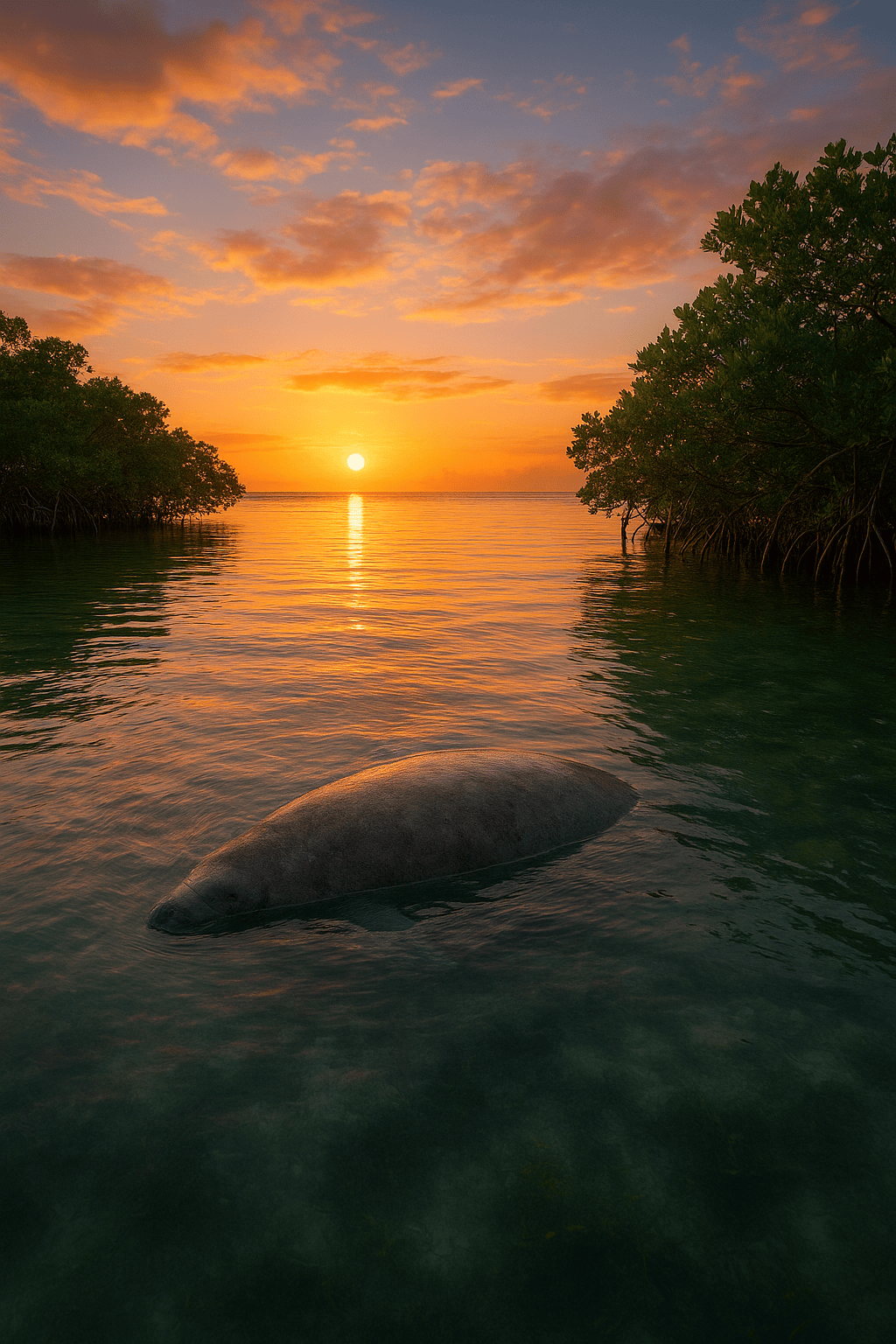

Few know why manatees appear here each autumn…
The first cool breeze of autumn drifts across Sanibel’s mangroves, and something magical happens beneath the surface.
Gentle shadows move through the shallows — the manatees have returned.
These “sea cows,” as locals fondly call them, come back to Sanibel’s warm waters every year when temperatures drop elsewhere. Their slow grace and curious nature remind us why this island still feels untouched by time.
If you’ve ever spotted a manatee surfacing at sunrise, you know that sense of peace that lingers long after they dive again.
Why They Return: Nature’s Hidden Routine🌊
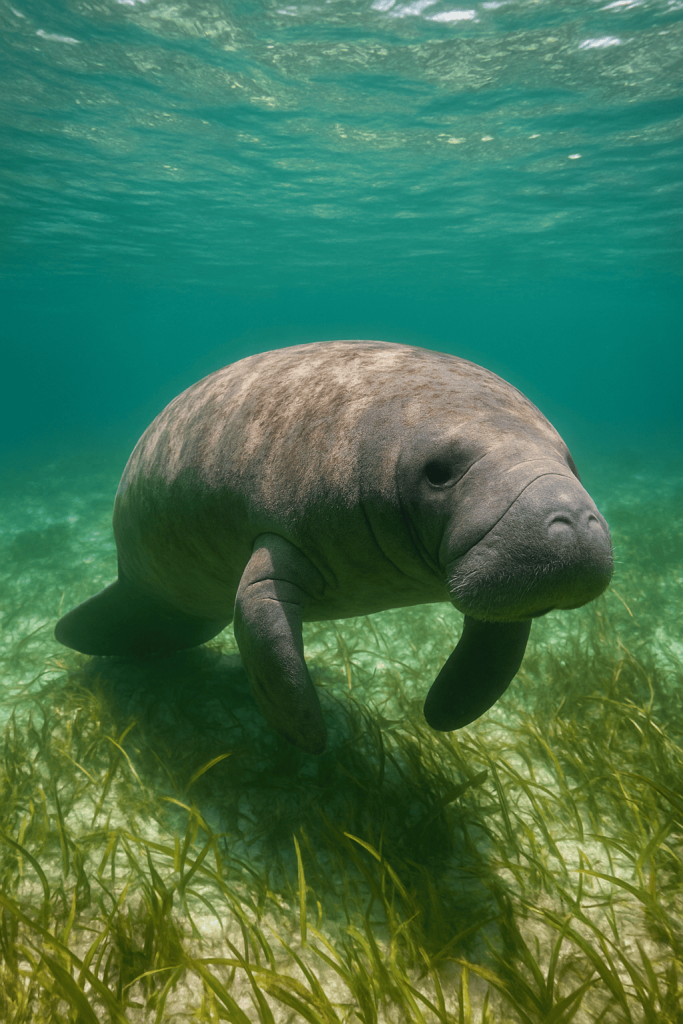
Manatees aren’t tourists — they’re travelers following warmth.
As Gulf waters cool, they migrate from northern rivers and estuaries toward Florida’s coastlines, searching for temperatures above 68°F.
Sanibel’s sheltered bays — like Tarpon Bay and Blind Pass — offer calm, food-rich habitats perfect for their annual stay.
They feast on sea grasses, drift lazily in sunlit channels, and sometimes linger all the way into spring.
Fun facts:
- A manatee can eat up to 150 pounds of seagrass a day.
- They surface every 3–5 minutes to breathe, but can stay submerged for 20 minutes during naps.
- Their closest relative isn’t a dolphin or a seal — it’s the elephant.
🪸 Tip for visitors: Early morning and late afternoon are the best times to spot them near mangrove edges or docks where the water is calm.
The Personalities Beneath the Waves
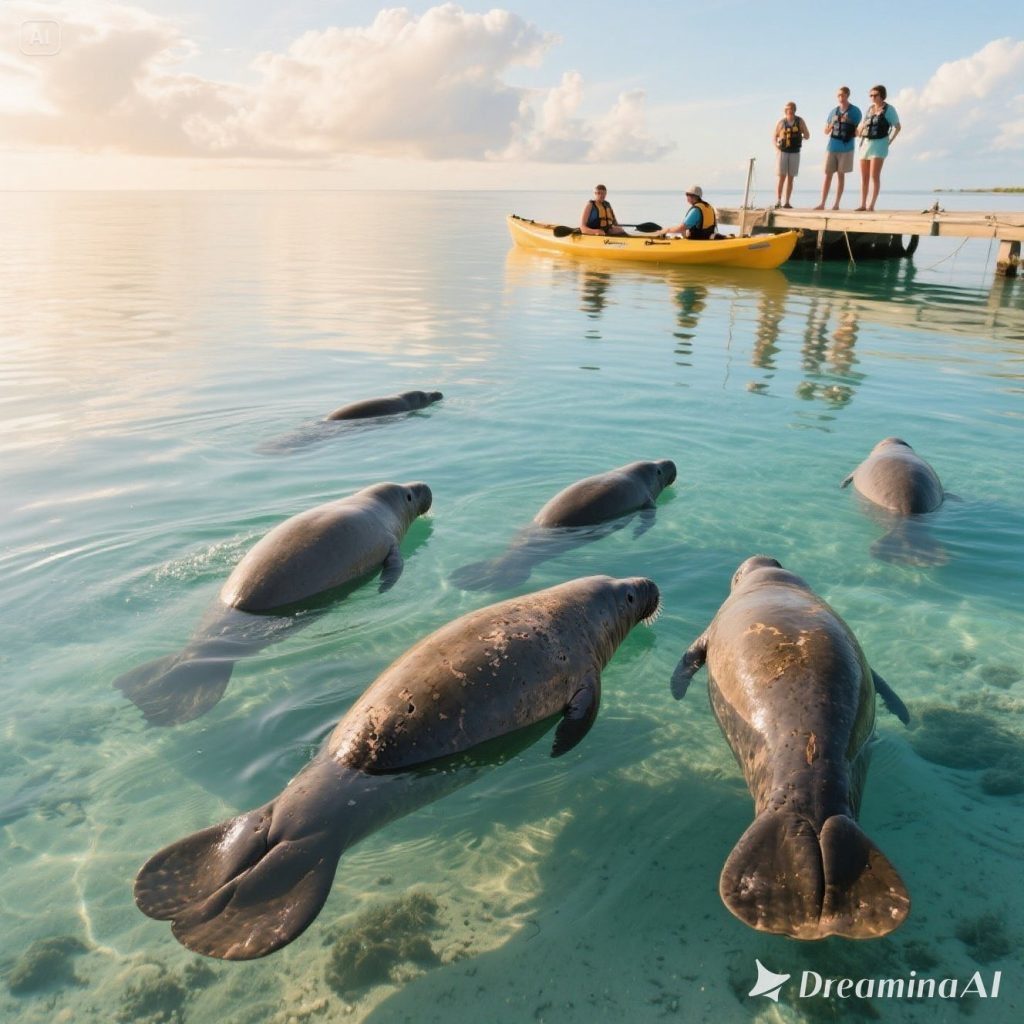
Despite their size — some weigh nearly a thousand pounds — manatees are gentle, social, and curious.
Locals say they often approach quietly moored kayaks, nudging them as if to say hello.
Each manatee has unique scars and tail patterns, often used by researchers to identify individuals. Some are known regulars — returning to the same areas every year, even decades later.
Quick “Did you know?” list:
- They communicate using chirps and squeaks underwater.
- A manatee’s heartbeat slows to conserve energy — sometimes just 30 beats per minute.
- They don’t have vocal cords; the sounds come from pressure changes in their throats.
To watch one rise from the blue depths feels like seeing the ocean itself take a breath.
How You Can Help Keep Them Safe🌴
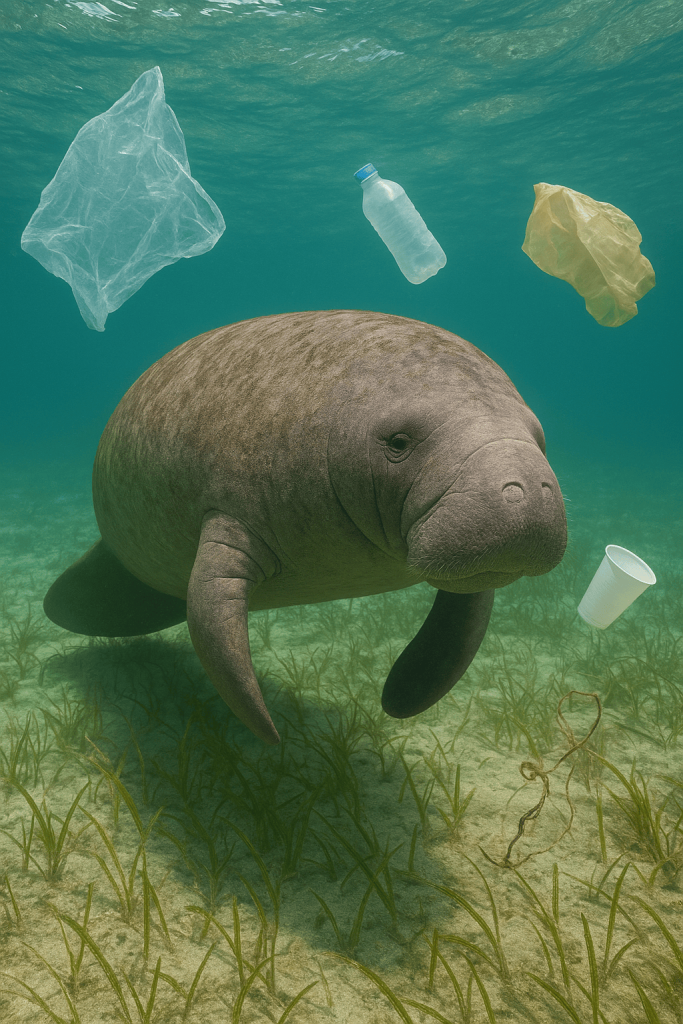
Sanibel’s waters may look calm, but danger can lurk in propeller blades and plastic debris.
Even small actions make a huge difference in keeping these gentle visitors safe year after year.
Simple ways to help:
- Slow your boat speed in marked manatee zones.
- Use reef-safe sunscreen — chemicals from regular sunscreens harm sea grass beds.
- Never feed or touch a manatee. They lose their natural caution when conditioned to humans.
- Pick up trash — especially fishing lines and plastic bags, which can entangle them.
If you’d like to go a step further, visit the Save the Manatee Club or Florida Fish and Wildlife’s Manatee Sightings Network to report encounters and support conservation.
Every careful choice we make — slower boats, cleaner shores, fewer plastics — means more safe returns each autumn.
Conclusion — A Season Worth Slowing Down For
Autumn on Sanibel is quieter, softer, and just a little more magical because of them.
The manatees remind us that nature doesn’t hurry — yet everything gets done in its own rhythm.
So next time you’re near Tarpon Bay or the Causeway, pause for a moment.
You might spot a gray shape gliding beneath the waterline — a reminder that in Sanibel’s calm, wonder always finds its way home.